
| Quick facts | Answer |
|---|---|
| Cost range | Varies by home - confirm in your quote |
| Time | Best done before or right after storms - confirm timing |
| Who's qualified | Ask for proof of insurance, relevant certifications (e.g., ASE for auto repair), and any license your state or city requires. |
Denville, NJ: what's different here
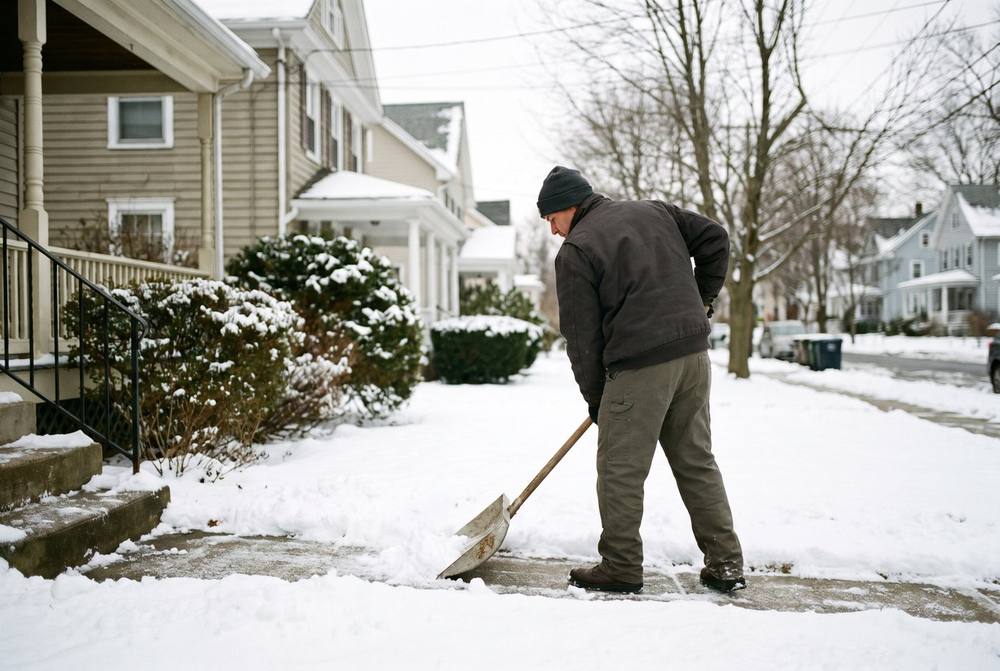
Denville is a township in Morris County, New Jersey, with a strongly seasonal Northeast climate - local guide data lists an average summer high of 85 degrees F and a winter low of 19 degrees F. The township's public works department clears township roads of snow and ice as quickly as possible, but private walkways and drives are up to property owners. With measurable snow possible from October through April, ice melt application is a recurring winter task here.
When should ice melt application happen in Denville?
Ice melt application is typically needed during snow, sleet, freezing rain, or refreezing conditions when walkways, drives, and parking areas become slippery. Denville's public works department says it clears township roads of snow and ice as quickly as possible, which shows how fast conditions change. Applying material soon after precipitation or an overnight refreeze helps keep surfaces safe.
What materials are used for ice melt application?
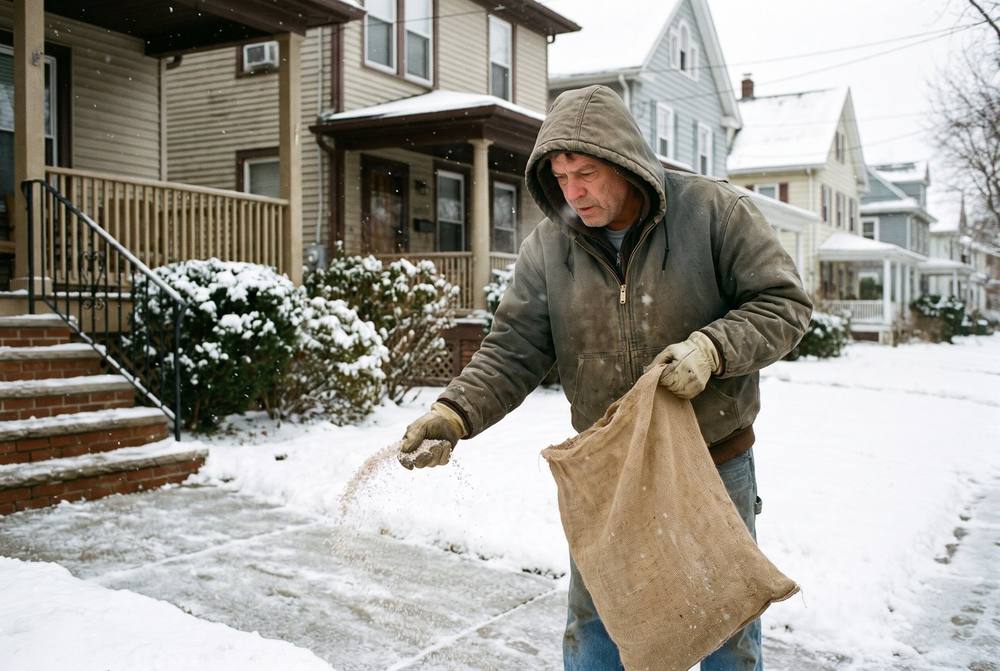
Denville's stormwater ordinance defines de-icing materials as granular or solid materials, such as melting salt, that assist in melting snow. That means ice melt application in the area commonly involves spreading salt or similar granular products rather than liquid-only treatment. Ask the pro which granular product they plan to use on your surfaces.
Does Denville enforce snow and ice removal on sidewalks?
Yes. Denville's streets-and-sidewalks code includes snow and ice removal requirements, and the township has a process for clearing them itself. If the township does the work, the costs can become a lien, so untreated ice can create municipal enforcement issues for property owners.
How does Denville's climate affect ice melt needs?
Local guide data lists an average winter low of 19 degrees F and annual snowfall of 16 inches for the Denville area, with about 50 inches of yearly precipitation. That mix supports frequent freeze-thaw and wet-surface conditions that increase ice-melt needs. Morris County overall averages in the middle 20s in winter and receives about 35 inches of snow each year.
Are there rules for storing de-icing salt in Denville?
New Jersey law requires municipalities to adopt NJDEP-mandated regulations for privately owned salt storage, and Denville's ordinance reflects that. If you keep your own supply of de-icing material, storage rules apply. A contractor who handles the material for you can simplify compliance.
What to do next
- Ask the pro whether they spread granular de-icing material, the form Denville's ordinance defines for melting snow.
- Review Denville's streets-and-sidewalks code so you know the township's removal requirements and lien process before ice forms.
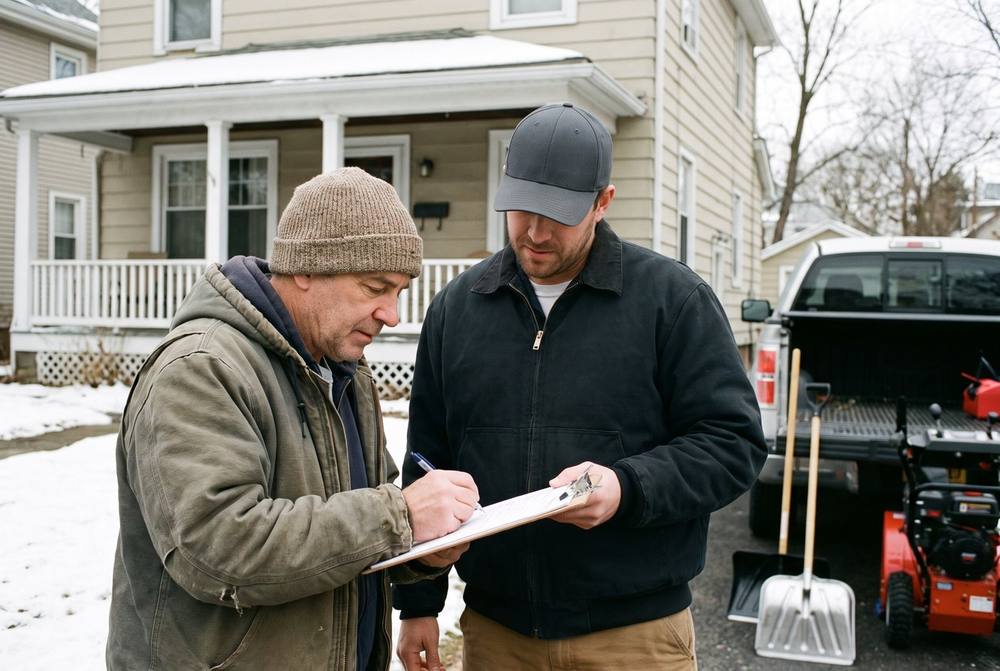
- Request proof of insurance from the independent contractor before the first storm of the season.
- Get a written quote that covers your walkways, driveway, and parking areas for the whole snow season.
- Call (973) 506-2546 or email [email protected] for a free quote from an independent, insured snow plowing contractors (ask for proof).
Jersey Snow Plow is a free referral service: an independent contractor does the work and may pay us a referral fee. You never pay us anything.